For my journey to Moux in June 2015, I chose the Bordeaux route and a detour towards Nantes, to visit Muscadet and Savennières, both in the Loire wine region.
The Loire is a varied wine region, with possibly more diverse wines than any other in France. Part of it lies close to the sea, where seafood friendly Muscadet is made, while the upper Loire is closer to Burgundy in style, only Sauvignon blanc is used instead of Chardonnay; Sancerre, Pouilly Fume, Menetou. The centre of the region is the home of Chenin blanc, and in particular, the tiny sub region of Savennières.
Savennières is an amazing wine. The epitome of Chenin blanc. Many wines are made from that grape in the Loire; Angers, Saumur, Vouvray, but it’s at Savennières the grape achieves greatness and, in my opinion, there’s a ‘grand cru’ area around the village of Epiré, a few kilometres east of the eponymous village.
I visited Epiré once before, in 1994, and at the time went straight for Chateau Chamboreau, where Ange and I bought a dozen Savennières, Clos du Papillon (1989 and 1990) and two 1990 Roche aux Moine. Roger Halfpenny, a wine importing friend, advised me; ‘Forget you’ve got ’em’, so I did, drinking no more than one a year. The last was finished only months ago and still seemed fresh after twenty-five years.
So twenty-one years after my first visit, I’m back and heading for Epiré. I have no idea how much I’m going to learn on this visit, I think I’m just going to find a suitable Chateau, taste and buy some wine.
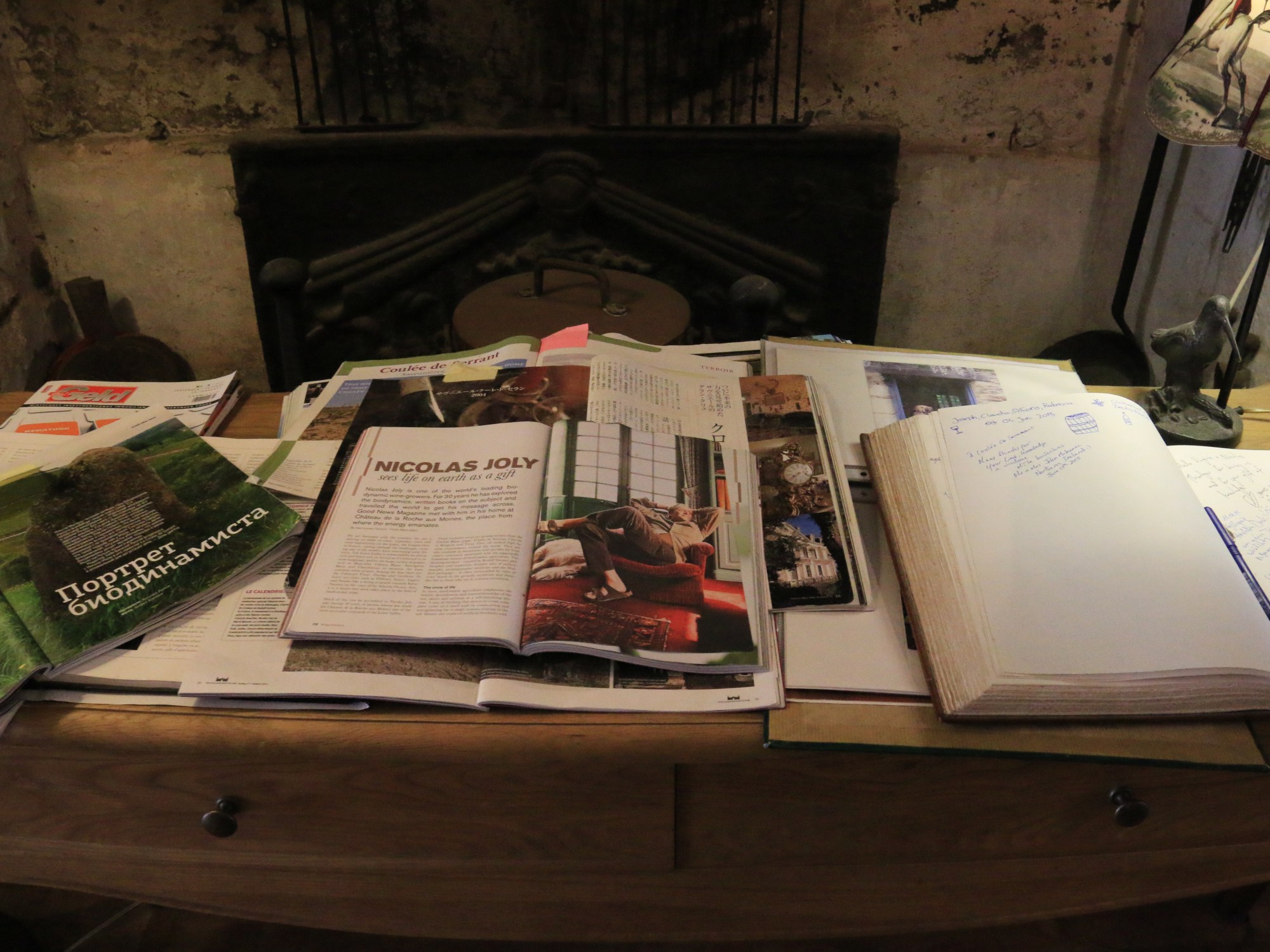
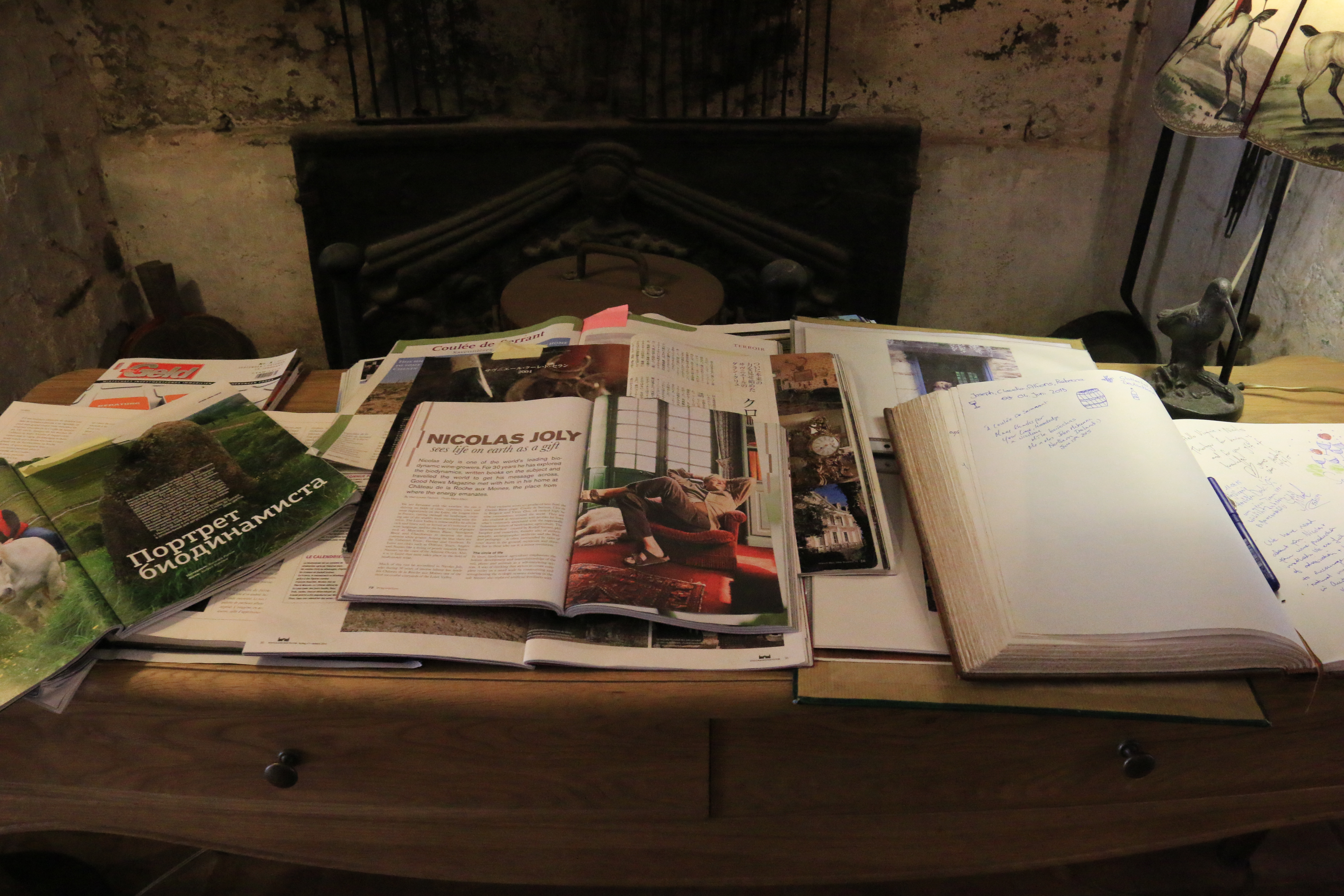
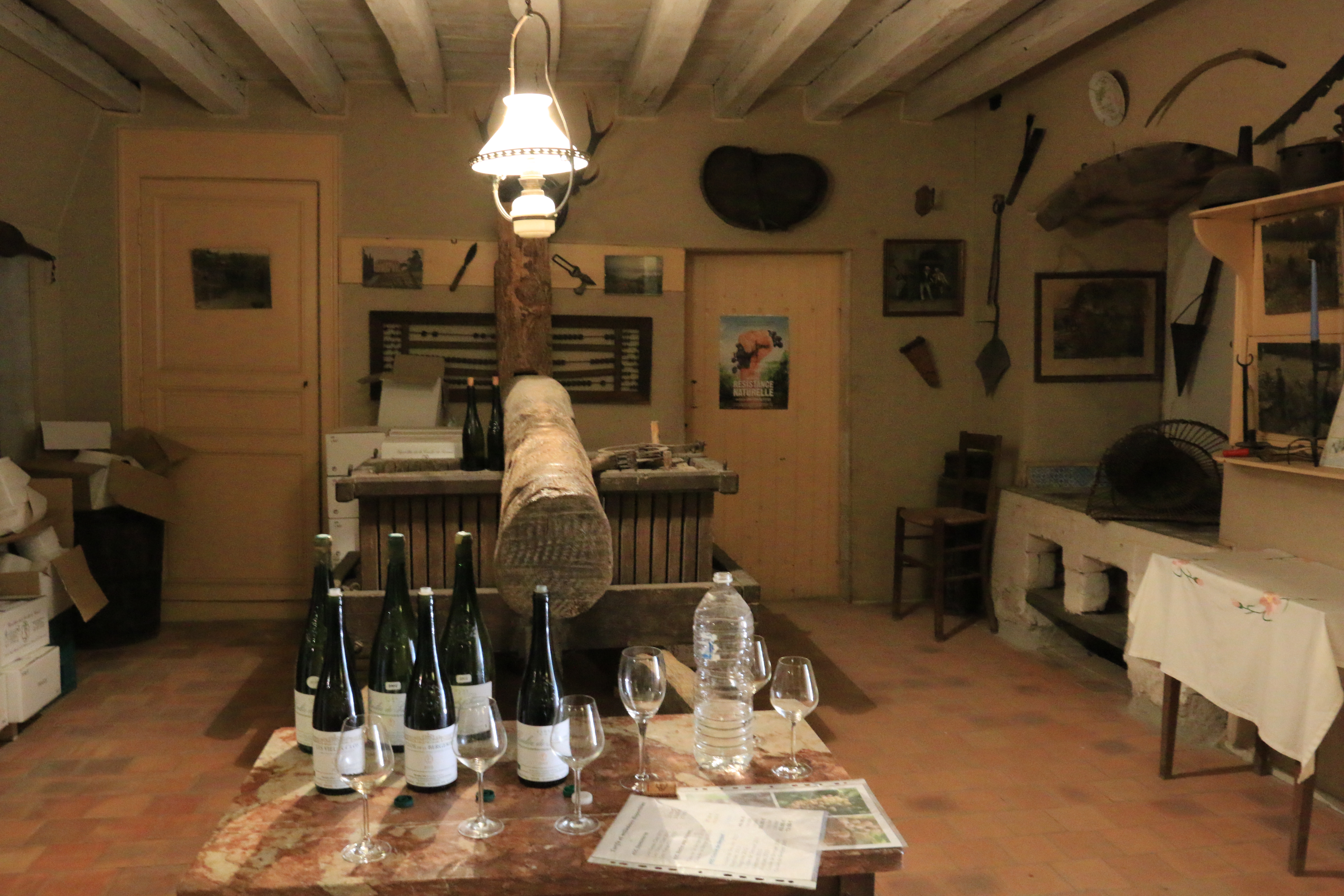
Savennières is not easy to find. After Angers, the roads are windy and narrow, and even though I’m close to the Loire I can’t see the river. This evening I’m staying at the Logis St Aubin, in Epiré. Close by are the famous names; Roche aux Moine, Coulee de Serrant. I find Chateau Coulee de Serrant and park on gravel under a hot sun. This is the home of Nicolas Joly, probably the most famous name in Savennières and one of the most famous in organic wines. I go into the tasting room, where a tasting costs five euros, refundable if you buy a bottle. A group of French walkers are already tasting. I’m given a glass and join in. The wines are a straight Savennières, the Clos de la Bergerie (Roche aux Moines) and Coulee de Serrant. They’re all great, perfectly drinkable now and have the level of acidity that will help them age. They’re not cheap, so I buy two of each. Virginie Joly, Nicolas’s daughter, and now largely running the show, as I understand, arrives just as I’m leaving.
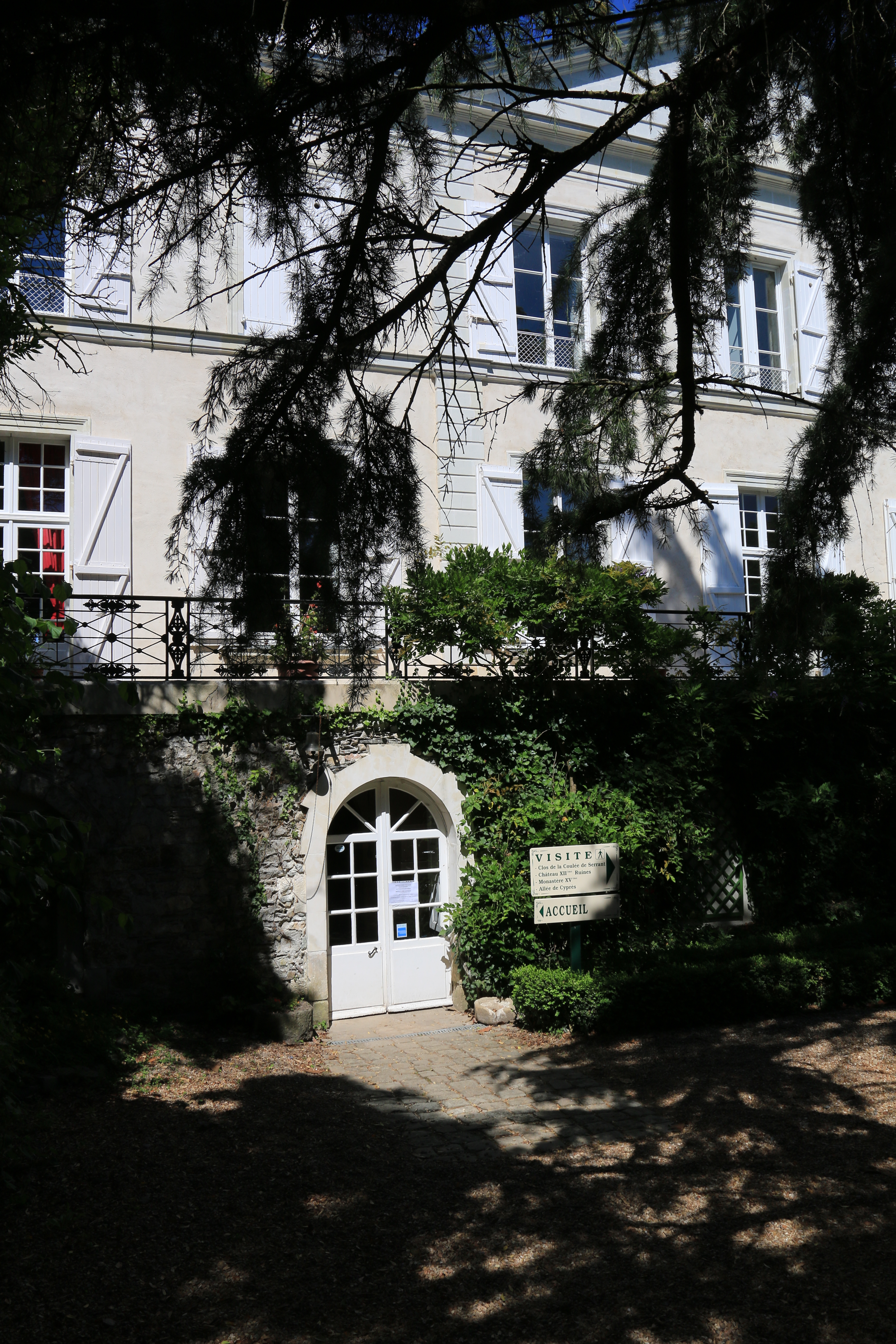
I get back in the car and head for the Chambre d’hote. Because it’s not readily obvious where to park, to take up some time, I drive up to Chateau Chamboreau to find it no longer makes wine. Back in the village, I see a sign for another grower; Damien Laureau and follow the road into the greenery to find them. They’re very welcoming and I meet Madame Laureau. In common with the best wine makers they have very little to sell; most is already sold, but I buy six of their ‘les Genets’. I also notice that they too are organic.
But it’s when I arrive at the logis that the journey of discovery really begins.
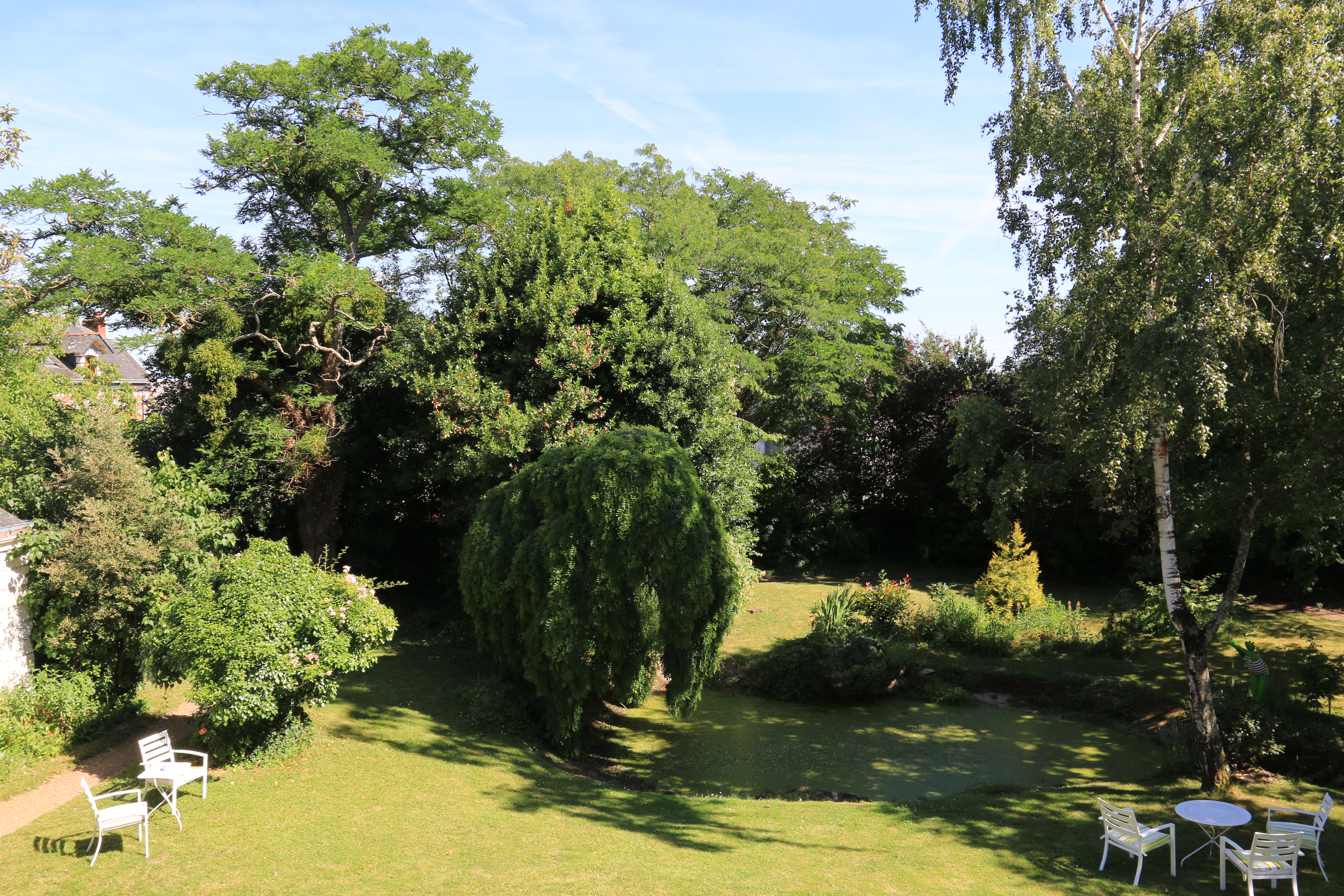
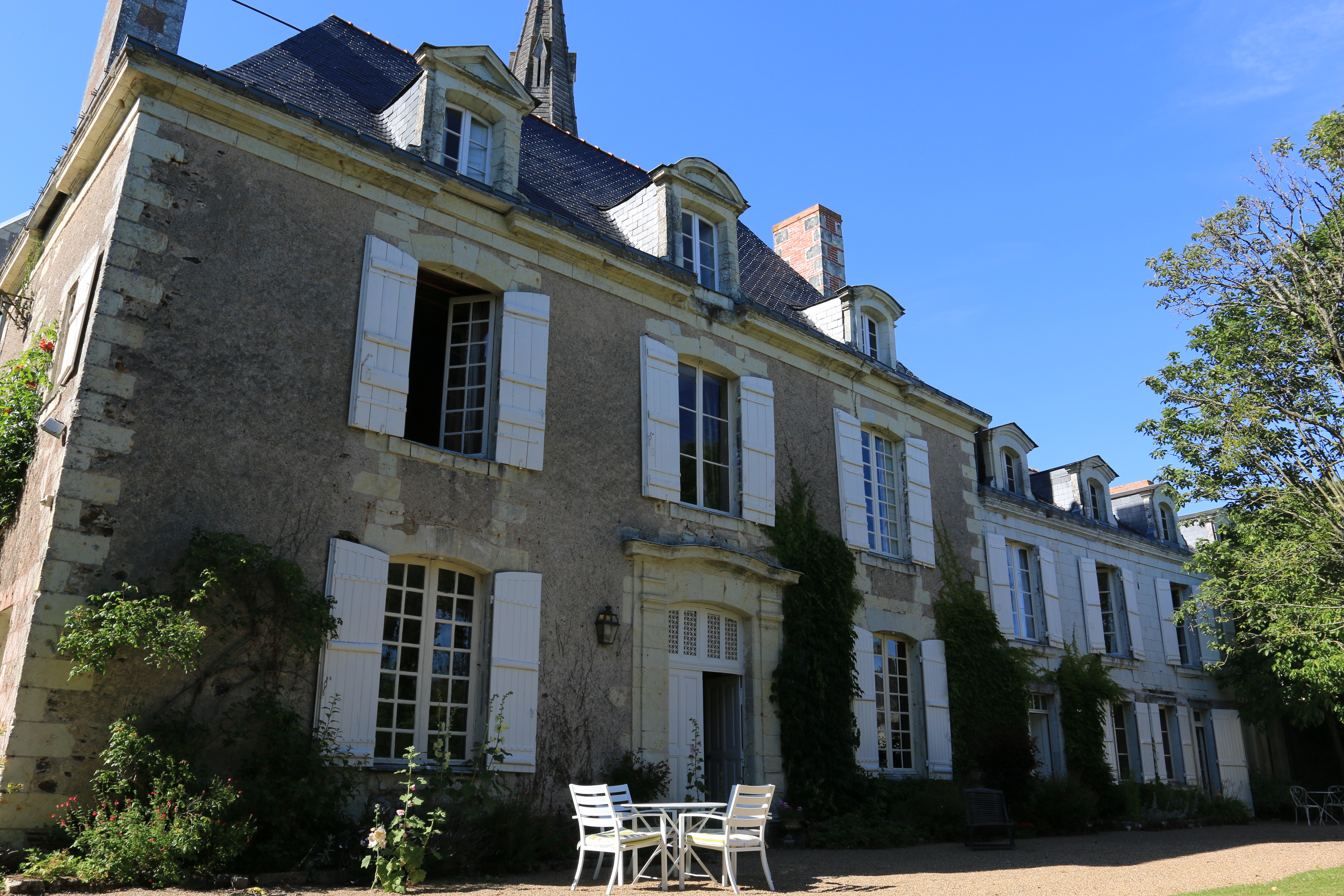
The logis and its gardens are beautiful, with a pond full of talkative frogs, the proprietor, chef and owner is Alix de Lagillardaie and she is a champion of Savennières , but moreso, a champion of Organic wines. From our discussions over dinner I learn a lot, and it seems there are a lot of Anjou growers making organic wines. Alix will only stock organic wines and her cellar, at the heart of the house, beneath a grand staircase, on schist, is filled with mainly local wines and all organic. Amongst the Savenierres she stocks both Joly and Laureau. In fact, when I told Madame Laureau where I was staying, she said Alix had been there just a couple of hours before. We choose a 2008 bottle from another grower; Eric Morgat and she also opens a Cotteaux du Layon.
Alix has run tastings for the growers she champions, serving her food to go with their wines. She was born in Savennières and counts Nicolas Joly, daughter Virginie and the Laureaus, as friends. She knows her subject. I learn that Chateau Chamboreau was sold off some years ago, so the vineyards are now in other hands. We talk about biodynamique (organic) wines, Chenin Blanc, and marketing. Personally, I think France should start to accept the type of grape on the bottle label. It’s a new habit, but consumers often have no idea that some grapes, famous outside France, are used for some of the best examples in the world and made in France. I know I’m biased, but this piece of marketing would make a huge difference. I’ve seen the same tussle of opinions in other regions, such as Cahors.
The visit leaves me more aware of biodynamique wines and I decide that it will help drive my choices in future. Oddly, more by luck, I find the next property I visit; Chateau Guiraud in Sauternes, is also biodynamique. More on that in a future blog.
I’ll finish with a big thankyou to Alix for a wonderful visit and stay at the logis, in the heart of Savenierres.
Links:
Nicolas Joly: http://coulee-de-serrant.com/uk/
Damien Laureau: http://www.damien-laureau.fr/fr
Eric Morgat: http://ericmorgat.com/
Logis St Aubin: http://logissaintaubin.com/#sthash.qps4jmTU.dpbs
https://www.facebook.com/profile.php?id=100007895237765&pnref=story
An award winning book on the subject of biodynamique wines in Anjou:
 lemouxetaire